ESG Implementation and Social Impact Measurement in Modern Companies
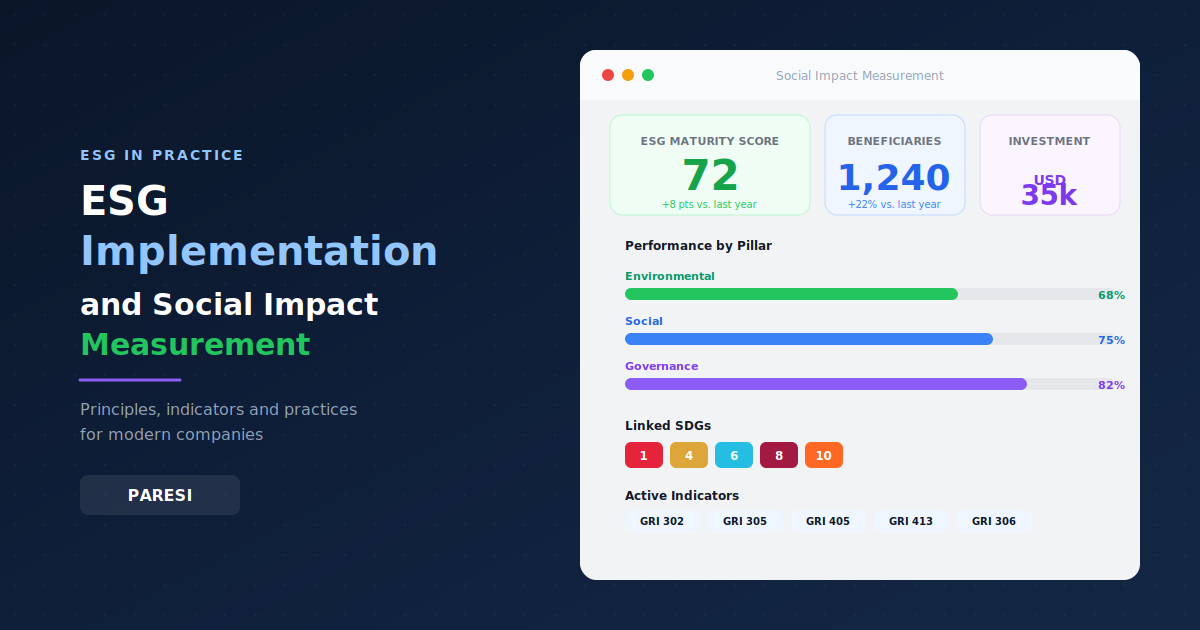
Implementing ESG (Environmental, Social, and Governance) practices in a company is not just a trend — it is a growing necessity in the contemporary corporate world. Companies that adopt ESG principles not only align better with social and environmental expectations but also have greater potential for long-term sustainable growth.
1. Understanding ESG Principles
The three pillars of ESG — Environmental, Social and Governance — form the foundation for corporate sustainability practices. Each pillar plays a crucial role in sustainability and long-term value creation.
2. Senior Management Commitment
Leadership commitment is essential for effective ESG implementation. Engaged leaders define a clear vision and robust strategies that integrate sustainability principles into company operations.
3. Integrating ESG into Corporate Strategy
To incorporate ESG into business strategy, it is essential to follow key steps: leadership commitment, materiality analysis, setting clear and measurable goals, integration across all processes, stakeholder engagement, and continuous monitoring.
4. Stakeholder Engagement
Effective engagement with internal and external stakeholders plays a crucial role. Internally, involving employees creates a culture of shared responsibility. Externally, transparent dialogue with investors, clients and communities allows for a better understanding of their expectations.
5. Implementing Environmental Practices
To reduce carbon footprint, companies can invest in technologies that increase energy efficiency, implement waste management and recycling programs, and adopt policies that encourage the use of renewable energy.
6. Social Projects and Their Impact
Social projects aim to positively impact communities and external stakeholders. They can range from education programs to promoting diversity and inclusion in the workplace.
7. Measuring Social Impact
Measuring the impact of social projects is essential for evaluating their effectiveness. Common methods include collecting quantitative data (employment indicators, income growth) and qualitative analysis (interviews and case studies).
Conclusion
ESG implementation and social impact measurement are fundamental processes for companies seeking sustainability and corporate responsibility. With the right tools and leadership commitment, any company can start this journey.
Ready to measure your company’s impact?
Create your free account and start structuring sustainability with GRI indicators and SDGs.
Get in Touch